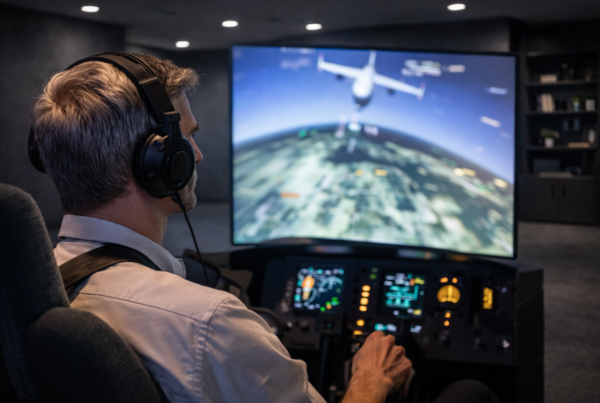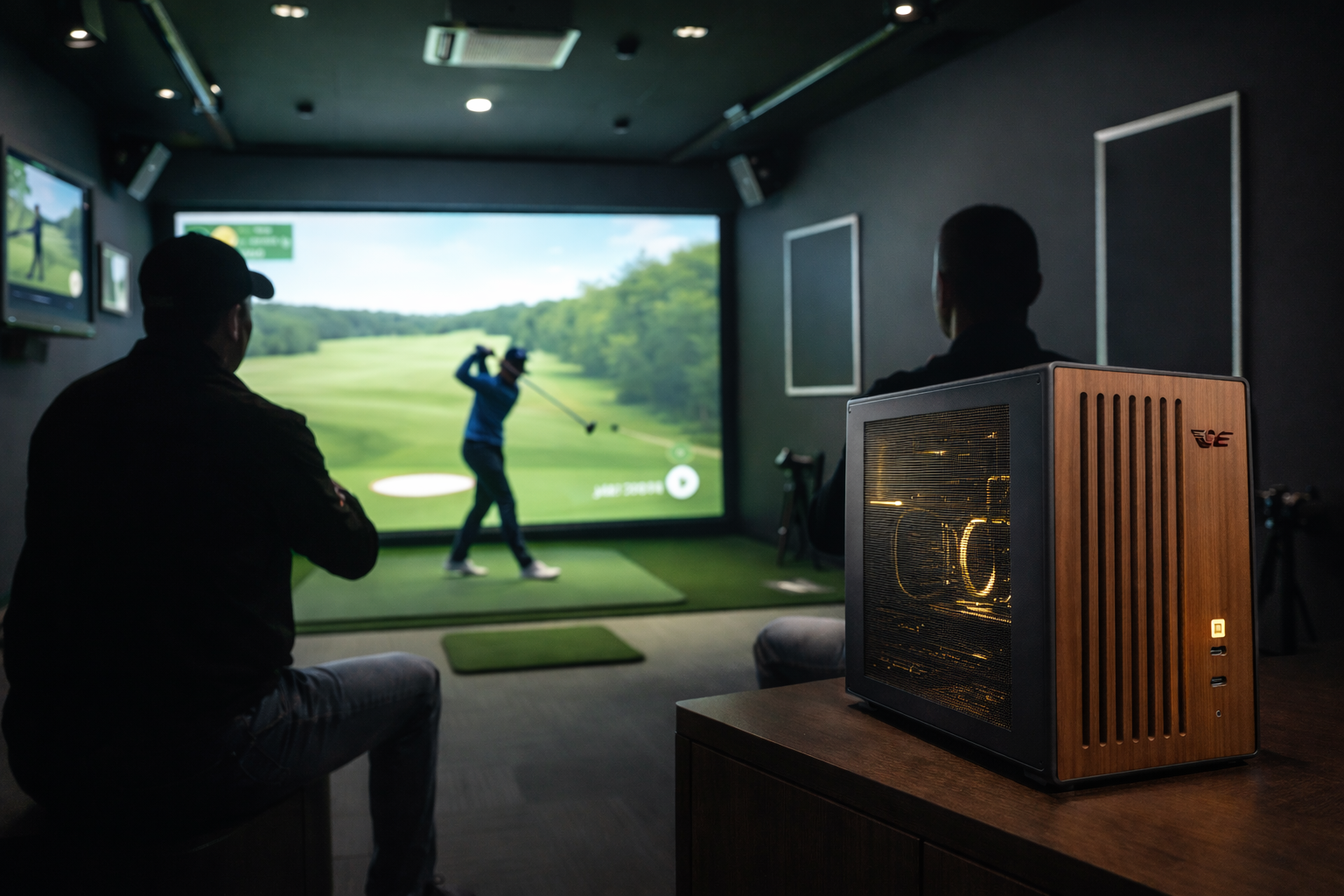
Simulator PCs must be built to last.Long-term reliability is not achieved by any single part.
It emerges from how every component behaves under sustained use.
Short answer
Long-term reliability depends on selecting components
that maintain stable behavior under continuous load.
Consistency, thermal margin, and conservative operating headroom
matter more than peak specifications.
What long-term reliability actually means
Reliability is not the absence of failure.
It is the absence of surprise.
In simulator systems, reliability means:
- Predictable behavior day after day
- Minimal performance drift over time
- Stable operation during long sessions
Component choice defines these outcomes.
CPU selection for sustained workloads
CPUs in simulators operate under continuous load.
Reliability depends on how consistently clocks are maintained.
Long-term reliable CPU choices prioritize:
- Strong sustained performance, not peak boost
- Thermal headroom under continuous operation
- Stable power behavior
A slightly slower but stable CPU
often outlasts a more aggressive configuration.
GPU selection and endurance
Simulator GPUs often render continuously
at fixed viewpoints or across multiple displays.
Reliable GPU selection focuses on:
- Consistent clocks under sustained load
- Robust cooling design
- VRAM capacity with thermal margin
Peak benchmark performance fades.
Endurance does not.
Memory selection and stability margin
Memory runs continuously in simulation workloads.
Marginal stability becomes visible over time.
Reliable memory configurations emphasize:
- Conservative timings
- Adequate voltage headroom
- Thermal tolerance during long sessions
Stability matters more than headline speed.
Storage selection for sustained I/O
Simulators stream assets continuously.
Storage must remain consistent under prolonged access.
Reliable storage choices prioritize:
- Low and stable access latency
- Thermal stability under sustained I/O
- Predictable behavior over time
Power delivery components and longevity
Power delivery affects every subsystem.
Long-term reliability depends on clean, stable power.
Reliable systems emphasize:
- High-quality PSU design
- Robust motherboard power regulation
- Thermal management of power components
Electrical stability protects everything downstream.
Cooling components and wear patterns
Cooling determines operating temperature over time.
Temperature determines component lifespan.
Reliable cooling choices focus on:
- Thermal equilibrium under load
- Low-RPM, continuous operation
- Minimal thermal cycling
Quiet systems are often longer-lived systems.
Why component interaction matters
Reliability is not additive.
It is systemic.
Marginal choices compound when:
- Thermals interact with power delivery
- Power behavior affects memory stability
- Storage and memory compete under load
Balanced systems age more gracefully.
Why gaming-focused component choices can age poorly
Gaming parts are often selected for peak numbers.
Simulators punish narrow operating margins.
What looks optimal in benchmarks
may become fragile under daily, sustained use.
What to prioritize when selecting components
Long-term reliability must be intentional.
Key priorities include:
- Sustained thermal and power headroom
- Conservative operating margins
- Predictable behavior under continuous load
- Components designed for endurance
Final thought
Reliable simulator PCs are not overbuilt.
They are correctly built.
Long-term reliability is not a feature.
It is the result of disciplined component selection
and respect for sustained operation.
Simulator Platforms We Support
RBS systems are designed for the most common simulator platforms used today.
Golf simulators
TrackMan · Uneekor · Foresight
Racing simulators
iRacing · Assetto Corsa · rFactor
Flight simulators
MSFS · X-Plane · Prepar3D