Indoor simulators rarely have that luxury.
Enclosed simulator spaces change how heat moves,
how air circulates,
and how cooling systems actually behave over time.
Short answer
Airflow design matters more in enclosed simulator spaces
because heat recirculation and restricted air exchange
directly affect thermal stability, noise, and long-session reliability.
What “enclosed” really means in simulation
Enclosed simulator spaces are not sealed,
but they limit airflow compared to open rooms.
Common examples include:
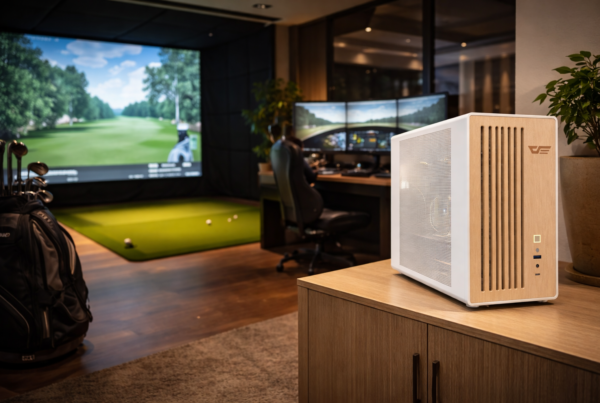
- Garages converted into sim rooms
- Dedicated indoor golf bays
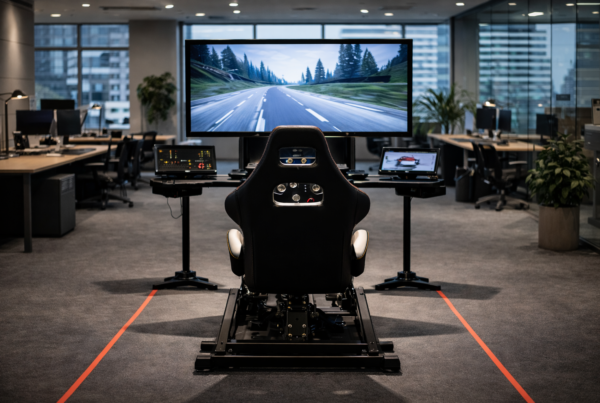
- Studios or office rooms
These spaces trap heat more easily.
Why airflow behaves differently in enclosed rooms
In open spaces, warm air disperses naturally.
In enclosed spaces, warm air accumulates.
This leads to:
- Rising ambient temperature over time
- Reduced cooling efficiency
- Greater thermal stress on components
Airflow design must account for this feedback loop.
Heat recirculation and its consequences
Poor airflow design allows hot exhaust air
to be pulled back into the system.
Heat recirculation causes:
- Gradual temperature increase
- Unstable fan behavior
- Thermal cycling instead of equilibrium
These effects become obvious during long sessions.
Case airflow inside enclosed spaces
Case airflow that works in open environments
may struggle in confined rooms.
Effective enclosed-space airflow focuses on:
- Clear intake and exhaust paths
- Minimal internal turbulence
- Consistent airflow direction
More fans do not automatically solve the problem.
Rising ambient temperature over time
In enclosed simulator rooms,
ambient temperature often increases during use.
As ambient temperature rises:
- Cooling headroom decreases
- Fan speeds increase
- Thermal stability becomes harder to maintain
Airflow must be designed for this progression.
Airflow design and noise interaction
Enclosed spaces amplify noise.
Poor airflow leads to aggressive fan behavior.
This results in:
- Higher sustained noise levels
- Audible fan ramping
- Reduced comfort during long sessions
Smooth airflow supports quieter cooling.
Why long sessions expose airflow weaknesses
Short tests rarely reveal airflow issues.
Long sessions allow heat to saturate the room and the system.
Over time:
- Exhaust air becomes warmer
- Cooling efficiency drops
- Performance and noise drift
Why gaming airflow advice often fails indoors
Gaming airflow advice assumes open spaces
and short, noisy sessions.
Simulator environments require:
- Controlled airflow
- Thermal equilibrium
- Predictable acoustic behavior
The priorities are different.
What airflow design should optimize for
Airflow in enclosed simulator spaces
must be designed for endurance.
Key priorities include:
- Consistent intake of cooler air
- Effective exhaust of warm air
- Minimal heat recirculation
- Stable airflow under rising ambient temperatures
Final thought
In enclosed simulator spaces,
airflow design determines how long a system stays comfortable and stable.
Cooling is not just about the PC.
It is about how the room and the system work together.
Simulator Platforms We Support
RBS systems are designed for the most common simulator platforms used today.
Golf simulators
TrackMan · Uneekor · Foresight
Racing simulators
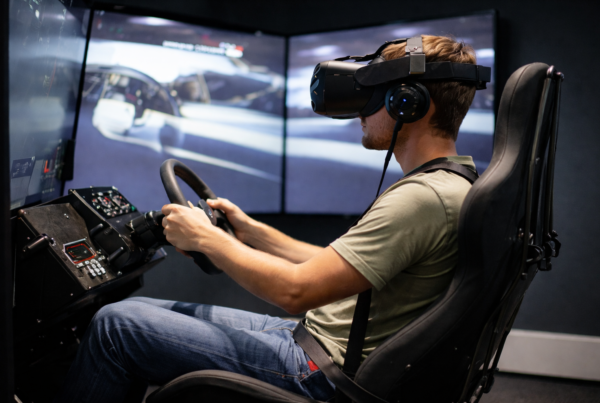
iRacing · Assetto Corsa · rFactor
Flight simulators
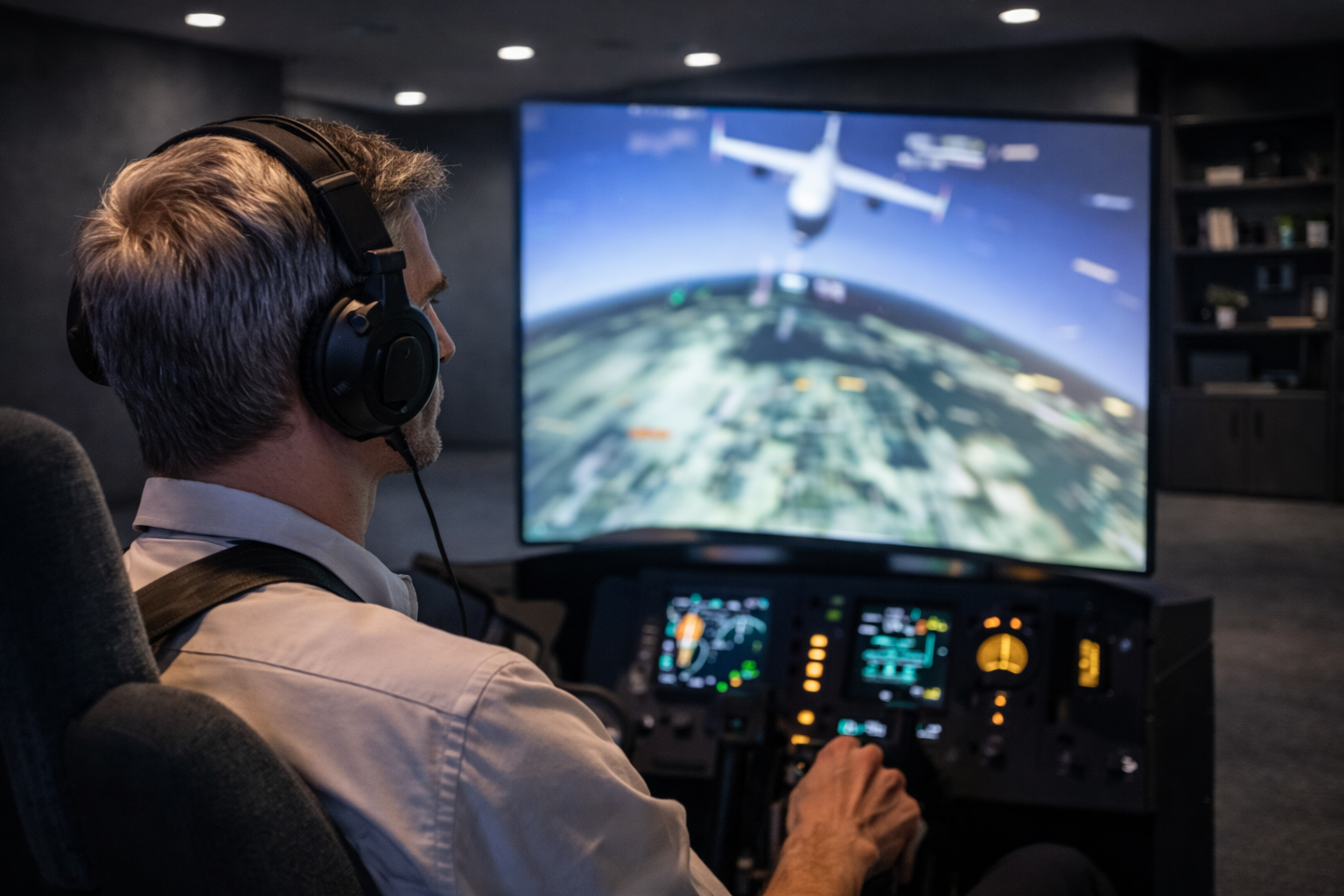
MSFS · X-Plane · Prepar3D