Run a benchmark, capture the numbers, and move on.Long-duration load is different.
It reveals how a system behaves not for minutes, but for hours.
Short answer
Stability beats raw power under long-duration load because simulators apply continuous stress.
Systems designed only for peak output often lose performance, consistency, and reliability over time.
What long-duration load actually means
Long-duration load describes a workload that remains active and demanding for extended periods.
Instead of spiking and resetting, the system ramps up and stays under pressure.
This is typical in simulation environments where sessions last multiple hours
without meaningful idle time.
Why benchmarks don’t tell the whole story
Benchmarks are designed to measure short bursts of performance.
They rarely represent how hardware behaves once temperatures stabilize
and power limits are reached.
A system that scores high in benchmarks can still degrade
when exposed to sustained simulation workloads.
Thermal equilibrium defines real performance
Under long-duration load, components reach thermal equilibrium.
At this point, cooling capacity, airflow design, and power delivery
matter more than theoretical peak capability.
Systems not designed for equilibrium often experience
gradual clock reductions and inconsistent behavior.
CPU behavior during extended sessions
CPUs under long-duration load behave differently than during short tasks.
Boost algorithms adjust, temperatures rise, and sustained frequencies settle lower.
In simulation, this can affect:
- Physics calculations
- Telemetry processing
- Input timing consistency
Stability becomes more valuable than brief moments of high clock speed.
GPU behavior under continuous rendering
GPUs in simulators often render without interruption.
Fixed viewpoints, multi-display pipelines, or VR workloads
keep the GPU active for the entire session.
Over time, sustained heat output can lead to:
- Clock drift
- Inconsistent frame delivery
- Increased noise from cooling systems
Raw GPU power matters less if it cannot be sustained reliably.
Power delivery under sustained demand
Long-duration load places continuous demand on power delivery systems.
Voltage stability and component quality become critical.
Inadequate power delivery can cause subtle performance drops
that are difficult to diagnose but easy to feel during simulation.
Noise and comfort over time
Noise levels often increase as cooling systems react to sustained heat.
What sounds acceptable during short tests
can become distracting over hours of simulator use.
Stability includes acoustic behavior, not just performance metrics.
Why raw power alone isn’t enough
Raw power assumes ideal conditions.
Long-duration simulation workloads expose real-world limits.
Without thermal balance and sustained stability,
peak hardware capability becomes irrelevant.
What simulator systems should be optimized for
Simulator PCs should prioritize behavior over time.
Key priorities include:
- Thermal equilibrium under continuous load
- Stable clock behavior for CPU and GPU
- Consistent frame delivery
- Quiet operation throughout long sessions
Final thought
Raw power looks impressive in short tests.
Stability defines real simulator performance.
In long-duration simulation, the best system
is the one that behaves the same in hour one and hour four.
Simulator Platforms We Support
RBS systems are designed for the most common simulator platforms used today.
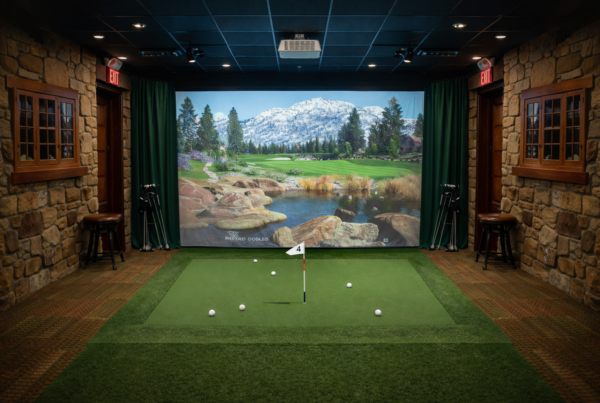
Golf simulators
TrackMan · Uneekor · Foresight
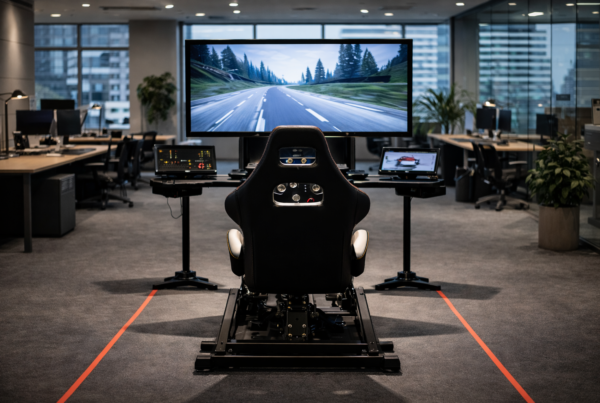
Racing simulators
iRacing · Assetto Corsa · rFactor
Flight simulators
MSFS · X-Plane · Prepar3D