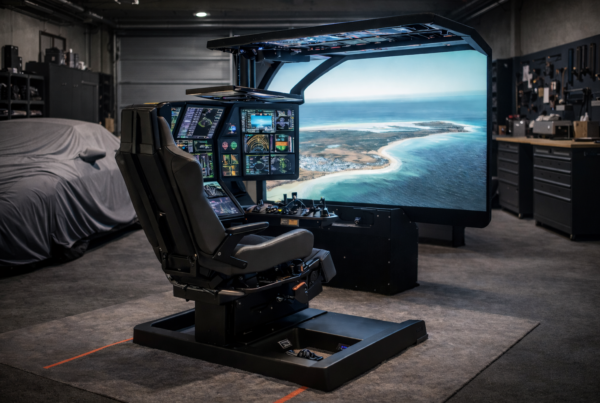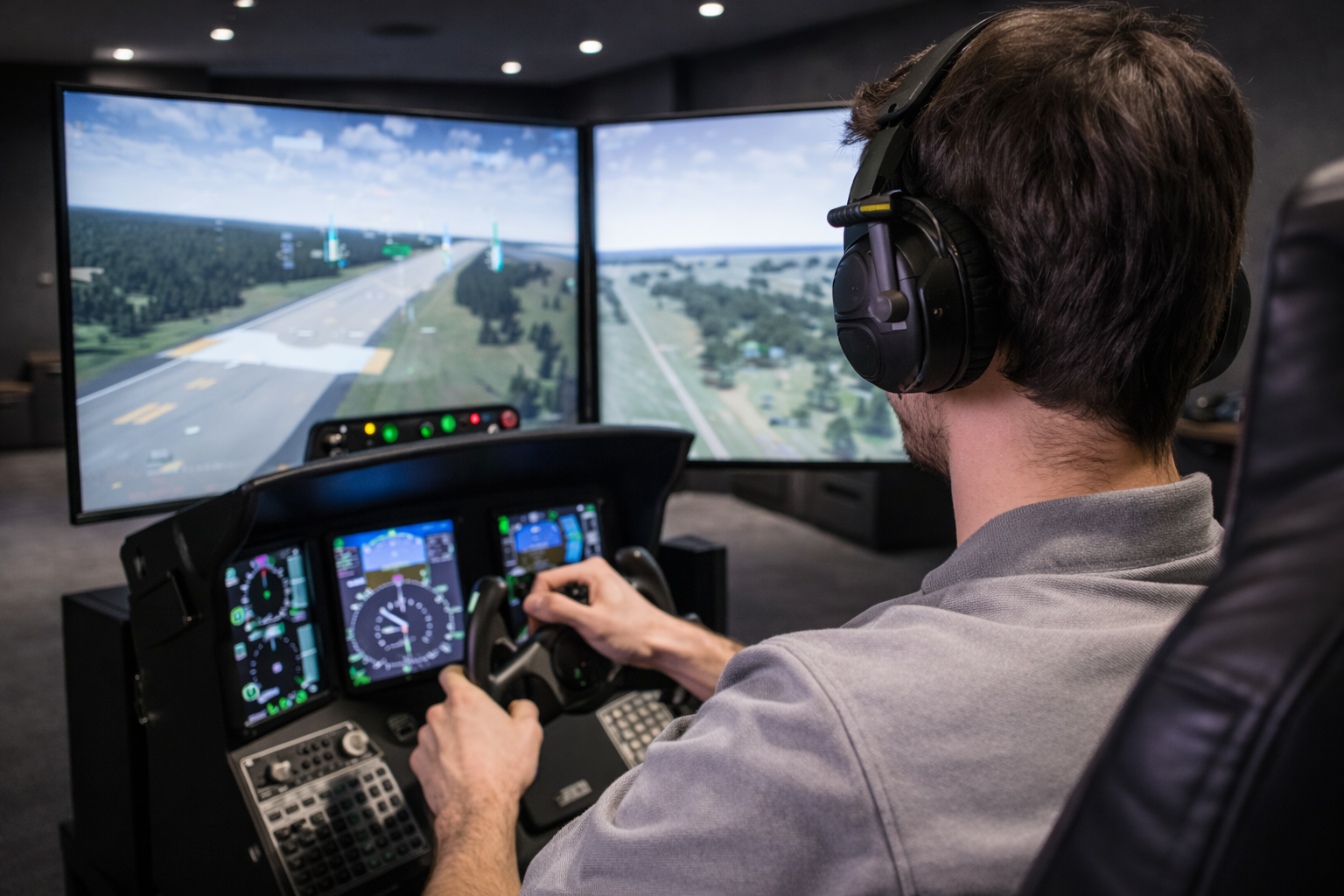
They depend on cameras, sensors, controllers, and tracking devices
that must behave consistently over long sessions.
In simulation, USB stability is not a convenience feature.
It is a core part of system accuracy.
Short answer
USB and peripheral stability matter because simulators rely on real-time input and sensor data.
Even brief interruptions or timing delays can reduce accuracy, consistency, and realism.
Why USB matters more in simulation than gaming
Many games tolerate short input delays or device reconnects.
Simulators often cannot.
Simulation setups frequently use:
- High-frequency input devices
- Cameras and optical tracking systems
- Launch monitors and motion platforms
- Multiple USB devices operating simultaneously
These devices depend on consistent USB behavior.
What USB stability actually means
USB stability is not just about devices staying connected.
It also includes timing, bandwidth allocation, and power delivery.
A stable USB environment provides:
- Consistent polling intervals
- Predictable device response times
- Reliable power delivery to peripherals
Small disruptions can accumulate into noticeable accuracy issues.
Latency and timing sensitivity
USB devices introduce their own latency.
When combined with operating system scheduling,
driver behavior, and background activity,
timing can vary from moment to moment.
In simulation, inconsistent timing affects:
- Steering and control feel
- Sensor accuracy
- Tracking reliability
Power delivery and USB hubs
Many simulation setups rely on USB hubs.
While convenient, hubs can introduce instability if not properly powered.
Common issues include:
- Voltage drops under load
- Intermittent device resets
- Bandwidth contention between devices
Stable simulation environments require predictable USB power behavior.
Drivers, firmware, and device behavior
USB devices depend heavily on drivers and firmware.
Updates can improve performance, but they can also introduce new timing behavior.
Simulation systems benefit from:
- Validated driver versions
- Controlled firmware updates
- Minimal background device utilities
Consistency matters more than novelty.
Why long sessions expose USB issues
During extended simulation sessions,
USB devices may heat up,
power states may change,
or background system behavior may shift.
These factors can lead to:
- Gradual input drift
- Intermittent disconnects
- Reduced tracking accuracy
Common symptoms of USB instability
USB-related issues often appear subtle.
Typical symptoms include:
- Occasional input delay
- Inconsistent sensor readings
- Devices reconnecting during sessions
- Accuracy issues that appear over time
These problems are often misattributed to software or GPU performance.
What simulator systems should optimize for
Simulator PCs should treat USB as part of the performance chain.
Key priorities include:
- Stable USB controllers and chipsets
- Predictable power delivery to peripherals
- Minimal device polling conflicts
- Consistent behavior over long sessions
Final thought
USB issues rarely cause obvious failures.
Instead, they quietly reduce accuracy.
In simulation, reliability at the periphery
is just as important as performance at the core.
Simulator Platforms We Support
RBS systems are designed for the most common simulator platforms used today.
Golf simulators
TrackMan · Uneekor · Foresight
Racing simulators
iRacing · Assetto Corsa · rFactor
Flight simulators
MSFS · X-Plane · Prepar3D